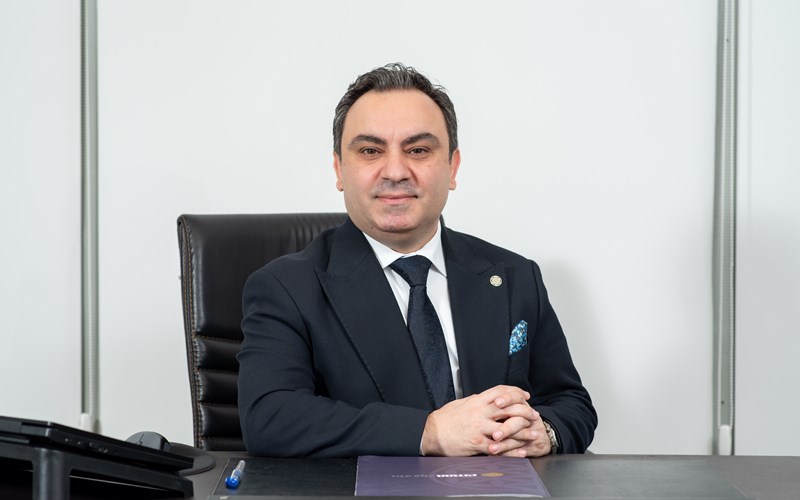
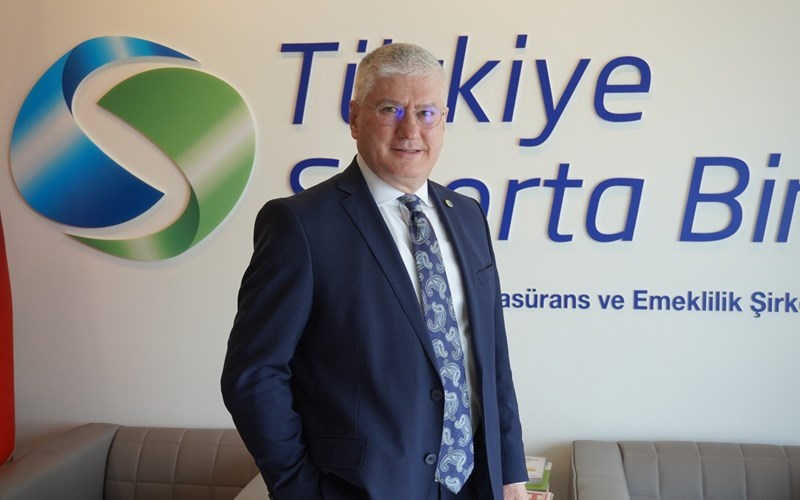
TSB President Ahmet Yaşar: ''We Must Promote Earthquake-Resistant Structures and Financial Protection Together''
Insurance Association of Türkiye (TSB) President Ahmet Yaşar emphasized that Türkiye’s preparedness against earthquakes should be addressed through a holistic approach encompassing safe construction, urban transformation, insurance, and strong reinsurance capacity on the 27th anniversary of the 17 August 1999 Marmara Earthquake. Yaşar said, “We cannot prevent earthquakes. However, we can reduce the loss of life and property they cause, make our cities more resilient, and recover from the resulting economic burden more quickly. To achieve this, we must strengthen physical resilience and financial resilience together.”
Insurance Association of Türkiye (TSB) President Ahmet Yaşar, in a statement issued on the occasion of the 27th anniversary of the 17 August 1999 Marmara Earthquake, commemorated the citizens who lost their lives in the earthquake and extended his condolences to the families who lost their loved ones.
Stating that 17 August was not only a major disaster for Türkiye but also a significant turning point when the country confronted the reality of earthquakes and reassessed its approach to disaster preparedness, Yaşar said:
“Twenty-seven years have passed. However, for those who experienced that night, 17 August is still very recent. We have not forgotten the pain of the thousands of people we lost. I believe that one of the most meaningful ways to commemorate them is to carry the lessons we have learned from what we experienced into the future.”
17 August Also Became a Turning Point for the Insurance Industry
Following the Marmara Earthquake, the establishment of the Compulsory Earthquake Insurance system, strengthening of reinsurance capacity, development of claims management processes, and investments in disaster risk modeling created a significant transformation in Türkiye’s financial preparedness against disasters.
Yaşar emphasized that insurance should not be viewed merely as a compensation mechanism that comes into play after a disaster occurs, and continued as follows:
“17 August showed us that disasters are risks that need to be managed not only when they occur but also before they happen. The role of insurance is not limited to paying claims. The real issue is to establish financial protection before risks materialize and to maintain the capacity needed to enable individuals, businesses, and the economy to recover after a disaster.”
Yaşar stated that the Kahramanmaraş earthquakes of 6 February 2023 demonstrated this reality once again, noting that the compensation provided by insurance companies and the Turkish Catastrophe Insurance Pool (DASK) made a significant contribution to the recovery of citizens and businesses and to the continuity of economic activity.
“We Must Reduce the Protection Gap”
Reminding that Türkiye is located on active fault lines, Yaşar stated that preparedness for a possible Marmara earthquake cannot be assessed solely through post-disaster response measures.
Yaşar stated that the insurance sector’s primary responsibilities in this area are to increase insurance penetration, maintain strong reinsurance capacity, improve risk modeling, and reduce Türkiye’s protection gap, and continued as follows:
“We cannot prevent earthquakes, but we can be much better prepared for the economic and social losses they may cause. Spreading risk across the broadest possible base prevents the financial burden of disasters from becoming concentrated on citizens, businesses, and the public sector. A strong insurance and reinsurance system is therefore one of the fundamental elements of Türkiye’s economic resilience.”
“Safe Structures and a Strong Protection System Are Both Essential for Resilient Cities”
Emphasizing that earthquake risk cannot be managed solely through financial instruments, Yaşar stated that building safety, urban transformation, risk mitigation measures, and insurance should be viewed as a complementary whole.
“Insurance is not an alternative to safe structures. Our priority must be safe and resilient buildings that prevent loss of life. In addition, we need a strong protection system to cover potential economic losses. The financial protection against earthquakes and disasters is insurance; the path to resilient cities lies in risk reduction, safe construction, and urban transformation.”
Drawing attention to the need for the urban transformation process to be carried out with confidence, Yaşar stated that mechanisms such as Building Completion Insurance contribute to protecting the rights and investments of citizens involved in the transformation process.
“We Must Protect Not Only Homes but Also Economic Activity”
Emphasizing that financial protection against earthquakes should not be limited to residential buildings, Yaşar highlighted the importance of industrial facilities, SMEs, and commercial enterprises also having adequate insurance coverage.
“In an earthquake, it is not only our buildings that are damaged. Our production capacity, businesses, employment, and supply chains are also affected. The ability of a business to resume operations after a disaster, protect its employees, and maintain production is extremely important for the continuity of economic activity. Insurance is a protection not only for businesses but also for the economy as a whole.”
Yaşar noted that covering the economic burden arising after disasters solely through public resources is not sustainable, emphasizing that the financial capacity provided by the insurance and international reinsurance system enables risk to be shared across society and the economy as a whole.
“Insurance Awareness Should Be Part of the Disaster Preparedness Culture”
Yaşar stated that reducing the protection gap in Türkiye requires not only the development of products and capacity but also greater insurance awareness, emphasizing the importance of making risk awareness and insurance knowledge a part of financial literacy from an early age.
“We do not view the development of an insurance culture merely as the purchase of more policies. The main goal is to make the understanding of taking precautions and establishing protection before risks occur a natural behavior in society. For this reason, we must make insurance awareness a part of financial literacy from childhood.”
“Preparedness Should Never Be Considered Complete”
Emphasizing that preparedness against Türkiye’s earthquake reality requires continuity, Yaşar concluded his remarks as follows:
“We have made significant progress over the past 27 years. We established DASK, expanded our insurance and reinsurance capacity, and improved our risk modeling and claims management capabilities. However, considering the scale of earthquake risk, we can never say that preparedness is complete.
We commemorate the citizens we lost on 17 August with mercy. We cannot change the tragedies we experienced, but we can change the future through the lessons we have learned from them.
Learning to live with earthquakes is not enough; we must promote earthquake-resistant structures and financial protection together. Our responsibility is to build safer structures, stronger protection mechanisms, and a more resilient Türkiye together.”