AXA Türkiye Climate Report 2026 Highlights Climate Risks for 2050
The AXA Türkiye Climate Report 2026, prepared by AXA Climate, highlights the risks that climate change could pose in Türkiye over the next 25 years across a wide range of areas, from water resources to agriculture, and from cities to critical infrastructure. According to the report, by 2050, approximately 65 million people could face high or very high levels of water stress, while 23 million could face heat stress.
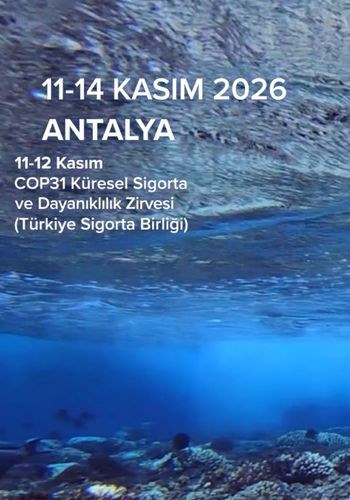
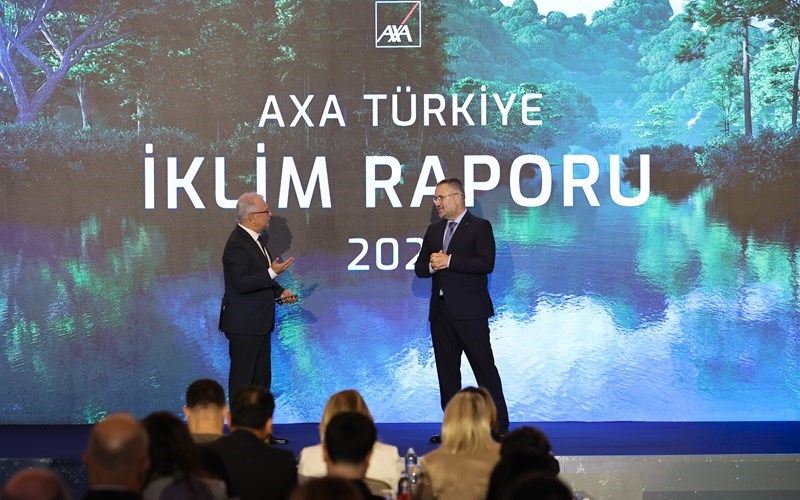
As Türkiye prepares to host COP31 in Antalya this November, the AXA Türkiye Climate Report 2026—prepared by the AXA Climate and AXA Türkiye teams—provides a comprehensive overview of how climate change could reshape the country’s risk landscape. Launched during Insurance Week with presentations by AXA Türkiye CEO Yavuz Ölken and Yekta Kopan, the report is based on projections from seven global climate models and local data, analyzing the likely distribution of climate risks across Türkiye’s various regions and their impacts on society, the economy, and critical sectors.
The report identifies water scarcity, extreme heat, wildfires, floods, and landslides as the prominent climate risks of the coming period. The interlinked nature of these risks makes the resilience of cities, agricultural production, energy and transportation infrastructure, supply chains, and local economies all the more critical.
Approximately Three-Fourths of Türkiye May Face High or Very High Water Stress
According to the report, by 2050, approximately 65 million people in Türkiye are at risk of facing high or very high levels of water stress. This figure corresponds to approximately 74%—or three-quarters—of Türkiye’s current population. At the same time, due to rising temperatures, changing precipitation patterns, and increasing water demand, approximately 66% of the country’s territory could face significant water scarcity. Changes in water resources may directly affect many sectors, ranging from urban water needs to agricultural production, and from industry to energy generation. Therefore, steps taken today in water management play a crucial role in strengthening the capacity to adapt to future climate risks.
Rising Temperatures May Put Pressure on Health, Energy, and the Workforce
Average temperatures nationwide could rise by approximately 4°C; one-fourth of Türkiye could experience at least five days each year when temperatures exceed 40°C. Under these conditions, it is projected that approximately 23 million people could be affected by heat stress, with about 11 million of them living in major cities. The effects of extreme heat can manifest in various ways in the areas of health, energy, and the workforce. The increased need for cooling places an additional burden on energy systems, while outdoor working conditions and productivity may also be affected by rising temperatures.
Fire, Flood, and Landslide Risks Vary by Region
The effects of climate change manifest in different ways across Türkiye’s various regions. The report indicates that while a single hazard may dominate in some regions, multiple climate risks may intensify simultaneously in others. It is projected that by 2050, approximately 10 million people could face a high risk of wildfires, while approximately 14 million could face a high or very high risk of landslides. While approximately 4.5 million people may live in flood-prone areas, it is estimated that about half of Türkiye’s population could experience more frequent heavy rainfall.
This interconnection among climate-related hazards could amplify the impact of these risks across a broader area. Damage to transportation infrastructure caused by extreme rainfall could disrupt supply chains, while prolonged periods of heat and drought could increase the risk of wildfires and put pressure on water resources. Therefore, the integrated assessment of climate risks is crucial for preparing urban planning, infrastructure investments, and economic activities for the future.
The Importance of Water Management in Agriculture Grows
Türkiye plays a significant role in global food markets, with fruit and nut exports exceeding $6 billion in 2025. However, by 2050, more than half of the country’s agricultural regions could experience very high levels of water stress. Crops such as grapes, olives, citrus fruits, Antep pistachios, figs, and apricots may face increasing pressures due to declining water availability and extreme heat. In some parts of Southeastern Anatolia, maximum temperatures could approach 50°C, creating new challenges for agricultural production and food security. This situation makes it even more important to address the efficient use of water resources in agriculture, production planning, and food security collectively.
Climate Risks Differ for Istanbul and Antalya
Antalya, which is to host COP31 and is one of the Mediterranean’s leading tourist destinations, could experience more than 30 additional days per year with temperatures exceeding 40°C by 2050. Due to higher temperatures and prolonged dry spells, the risk of wildfires in the city’s surrounding areas is also projected to increase significantly.
In Istanbul, Türkiye’s economic hub, a different risk profile emerges. In this city of more than 15 million people, high population density, intense economic activity, and critical infrastructure are all concentrated in the same geographical area. By 2050, it is projected that approximately 322,000 people will live in flood-prone areas, while approximately 1.5 million will live in regions at high risk of landslides. Major transportation corridors and critical infrastructure assets may also be affected by climate-related events.
While the report highlights future climate risks, it also identifies opportunities to mitigate their impacts. More detailed risk maps, robust early warning systems, resilient infrastructure, improved water management, and the integration of climate projections into urban planning and investment decisions are among the key steps that could strengthen Türkiye’s capacity to adapt to changing climate conditions.
Yavuz Ölken: “Understanding the Risks and Taking Action Today Is of Critical Importance”
Yavuz Ölken, CEO of AXA Türkiye, stated that while the report highlights the climate risks Türkiye may face, it also underscores the importance of taking action today, saying:
“The picture painted by the AXA Türkiye Climate Report 2026 clearly shows how climate risks vary across different regions of Türkiye and how they can have far-reaching impacts—from our daily lives to the economy. Climate change is no longer a future scenario; it is a risk area whose direct economic, social, and insurance-related impacts are already being felt today. Climate change stands before us as a new reality that is also transforming the way the insurance industry operates.
For this reason, it is of great importance to better understand these risks, develop earlier forecasts using data, and contribute to risk mitigation. We must approach the role of the insurance industry with a mindset that goes beyond merely covering incurred losses, one that contributes to better protection for our customers and society.
At AXA Türkiye, we are working to anticipate risks, raise awareness, help prevent losses, and strengthen society’s capacity to adapt to changing conditions. We highly value and support the efforts of public institutions in this area, particularly the Ministry of Environment, Urbanization, and Climate Change and AFAD. We remain committed to continuing to contribute to our country’s future by leveraging the knowledge, experience, and risk management perspective inherent to the insurance industry.”
The report, which highlights that climate risks are an issue for today—not just for the future—underscores the importance of taking action based on science-backed data so that Türkiye can build a more resilient future.
Turkish version of the AXA Türkiye Climate Report 2026 may be accessed here: https://www.axasigorta.com.tr/tr-iklim