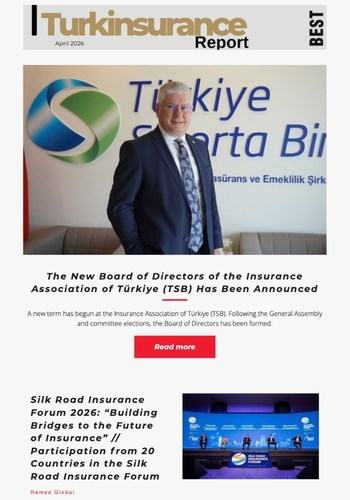
Silk Road Insurance Forum 2026: ''Building Bridges to the Future of Insurance'' // Participation from 20 Countries in the Silk Road Insurance Forum
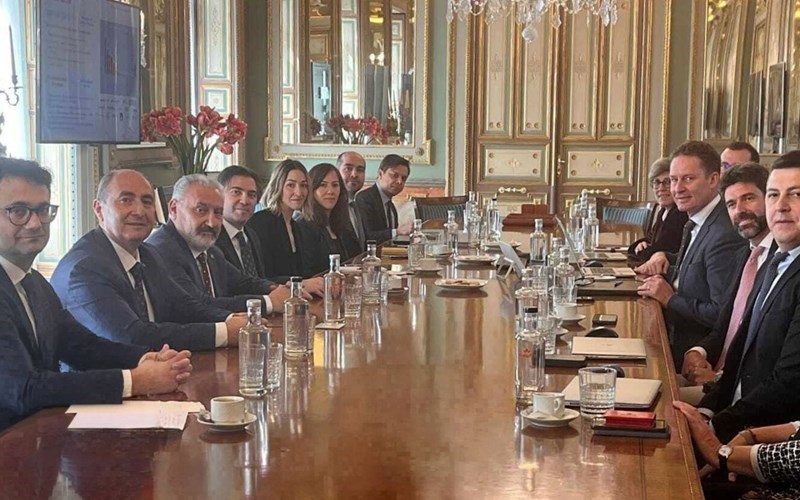
The Silk Road Insurance Forum, which brought together the international insurance sector, was held in Istanbul, hosted by Remed Global with the support of the Insurance Association of Türkiye (TSB).
The forum, held at Mandarin Oriental Bosphorus, was attended by prominent figures from the business world and the insurance sector. Sabine VanderLinden, author of the Insurtech book, which is among the world’s best-selling business books, and leaders of insurance associations participated in the forum as speakers.
The forum brought together participants from more than 20 countries
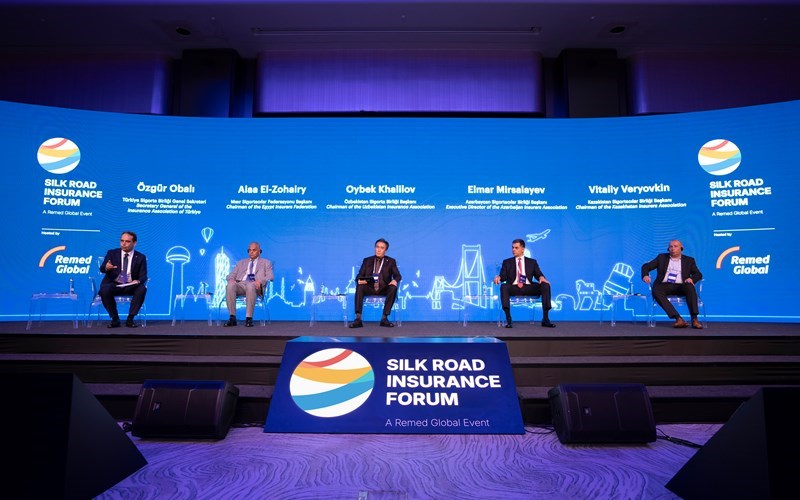
The Silk Road Insurance Forum, held under the hosting of Remed Global with the support of the Insurance Association of Türkiye (TSB), brought together participants from more than 20 countries. Organized under the theme “Building Bridges to the Future of Insurance,” the forum addressed the future of insurance, opportunities in the developing Silk Road region, and joint global steps to be taken in the field of smart insurance. Among the speakers at the forum were Ruşen Çetin, Coordinator President of the DEİK Türkiye-Avrasya İş Konseyleri, Uğur Gülen, Sabine VanderLinden, retired admiral Cem Gürdeniz, Alaa Al-Zohairy, Oybek Khalilov, Elmar Mirsalayev, and Vitaliy Veryovkin. In the session titled “Opportunities in the Silk Road Region,” dialogues were held with the presidents of insurance associations from regional countries, moderated by Özgür Obalı.
Alaa Al-Zohairy: “In the past 8 years, the sector’s market size has exceeded 100 billion Egyptian pounds”
Speaking at the session attended by the presidents of insurance associations, Alaa Al-Zohairy, President of the Egyptian Insurance Federation, stated: “When we took office as the new administration in 2017, we decided that it would not be sufficient to focus solely on product development. At the same time, we aimed to increase the penetration of insurance within society. In 2017, the market size was 22 billion Egyptian pounds. Today, this figure has reached 117 billion Egyptian pounds. This growth is the result not only of the federation’s efforts but also of the joint work of regulatory authorities and companies. We launched an international insurance conference in Sharm El Sheikh. We started with 600 participants, and today we have reached 1,200 participants. We developed microinsurance products. We offer policies with low premiums of around USD 2–3 per year. In this way, we have reached 27 million people who had never previously purchased insurance. In this segment, the number of policies increased from zero to 11 million. We established a travel insurance system integrated with passport procedures. As a result, the market grew from 60 million pounds to 1.2 billion pounds. With the newly enacted insurance law, we implemented significant reforms. These reforms allowed companies to operate in a single line of business. Professional liability insurance for doctors was made mandatory. General liability insurance became compulsory for places such as shopping malls and cinemas. In addition, we continue to make improvements by collaborating with universities to increase the number of actuaries.”
Oybek Khalilov: “Uzbekistan is currently in a new ‘Renaissance’ period”
Oybek Khalilov, President of the Uzbekistan Insurance Association, stated: “Uzbekistan is currently in a new ‘Renaissance’ period. Over the past five years, we have recorded approximately 70 percent growth. I should note that this excludes the pandemic period. In the last three years, we have achieved an average sectoral growth of 40 percent. Over the past decade, the insurance market has grown tenfold. This growth is not driven by inflation, but by a genuine increase in demand. Insurance penetration still remains at a low level—around 0.7 percent. This indicates that there is significant growth potential. I would also like to share recent developments in our sector: digitalization is increasing, artificial intelligence has started to be used, electronic policies have become mandatory, and AI systems are being established for fraud detection. The greatest opportunity for our sector lies in cyber insurance. There are currently no products in this area, but we believe there is a substantial need.”
Elmar Mirsalayev: “Premium Volume in Azerbaijan Has Reached USD 884 Million”
Elmar Mirsalayev, President of the Azerbaijan Insurance Association, stated at the Silk Road Insurance Forum: “In 2025, our insurance market grew by 11 percent, reaching a premium volume of USD 884 million. In claims payments, we observed a 22 percent increase, reaching USD 541 million. When we look at the insurance lines driving growth in Azerbaijan, life insurance, compulsory motor third-party liability insurance, health insurance, compulsory insurance for occupational accidents and diseases, fire insurance, and compulsory residential insurance stand out. I would like to mention a few of our main targets for 2026. We will hold the 11th Azerbaijan International Insurance Congress in Baku, which has long been among the events we organize. Among our long-term investment initiatives in insurance technology, we will also host the third Insurtech Azerbaijan Summit, which has become a traditional event. Our 2026 targets are not limited to events; we will also take steps to strengthen the sector’s infrastructure. These include increasing insurance literacy. We will implement several new projects to raise insurance awareness in society. Together with the Central Bank of Azerbaijan, we will put into action our plans to introduce additions and updates to the insurance law. Among our digitalization projects, in cooperation with the Compulsory Insurance Bureau (ISB), we plan to take several important steps toward the digital transformation of the insurance sector.”
Vitaliy Veryovkin: “We have started using AI in vehicle damage assessments”
Vitaliy Veryovkin, President of the Kazakhstan Insurance Association, stated that significant developments have been recorded in the insurance sector in his country and made the following remarks: “Speaking about the Kazakhstan market, like other countries, we are also demonstrating strong growth figures. In 2025, we recorded growth of approximately 20–25 percent compared to 2024. However, what is most interesting is not only the figures themselves, but the dynamics behind them. The overall political, technological developments and economic conditions in the country are reflected in our operations. I would particularly like to highlight developments in digitalization. We do not yet know how far we will go in this area, but one of our sources of pride is the Single Statistical Database. We collect all life and non-life data, contracts, payments, and reinsurance information in this system. It is integrated with 95 government services. We can access all data instantly when issuing contracts or making payments. The accident report process has been fully digitized. We have started using AI in vehicle damage assessments, which also helps us prevent internal fraud. A highly critical and turning-point period is now beginning for Kazakhstan. On February 10, 2026, in a speech delivered to parliament, the President of Kazakhstan, Kassym-Jomart Tokayev, instructed that the legislation governing insurance activities be completely rewritten. We have now started preparing a development concept for the insurance market through 2030 and beyond, with the participation of foreign consultants. One of our key priorities is the preparation and adoption of legislation on compulsory insurance for immovable property against floods and fires. In this regard, we would particularly like to benefit from the experiences of Türkiye and Azerbaijan.”
Sabine VanderLinden: “There is a gap in the processing of 16,000 claims”
Sabine VanderLinden, who delivered the keynote speech at the forum, stated: “Many claims are increasing by around 20 percent. Teams are not able to process enough claims. The insurance policy issuance process is becoming more complex. In the previous session, we heard about pricing transformation. We now need to discuss new risk factors and emerging risks entering the market. Customers want a fast experience or excellent service, right? But at the moment, we are not able to deliver that. And I observe that we are suffering from a talent shortage. When we look at the data from the United States, there is currently a gap of 16,000 positions in the processing of insurance claims. We are unable to fill these roles, and I assume the same situation exists globally. So what does this capacity gap mean? If you are operating at 100 percent capacity, it means the complexity level of the work we need to handle has increased by 40 percent. In other words, we are unable to keep up. Some statistics also show that 39 percent of employees’ core skills will change by 2030. We need to think about this. Four out of the ten skills we currently have will disappear. We need to reskill and consider what the business world of tomorrow will require.”