Insurance Model for Resilient Cities Discussed at Quick Tower
As part of Insurance Week, the panel discussion titled “MTP’s Vision for Resilience: Urban Transformation and Insurance—From Risk to Resilience,” held on October 6 at Quick Tower, addressed Türkiye’s need for urban transformation from the perspectives of financing, urban planning, insurance, and risk management. Ahmet Yaşar, President of the Insurance Association of Türkiye and Chairman of the Maher Holding Insurance Group, emphasized the need to reduce the protection gap, noting that only about 6% of the economic damage caused by the February 6 earthquakes was covered by insurance. The panel highlighted the role that Building Completion Insurance can play not only in protecting rightful owners but also in selecting the right contractor and ensuring sustainable projects.
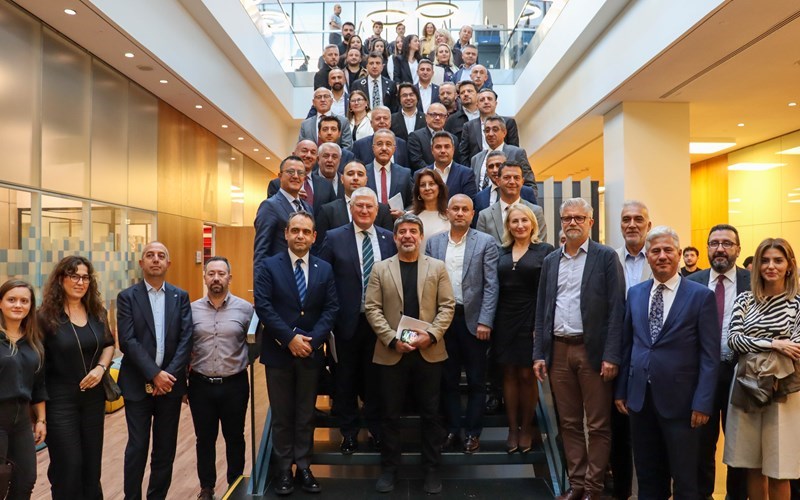
The event, which began with an opening speech by Ahmet Yaşar, President of the Insurance Association of Türkiye and Chairman of the Maher Holding Insurance Group, featured a panel moderated by journalist Noyan Doğan. Panelists included Özcan Biçer, Senior Urban Planner at the Istanbul Planning Agency; Dr. Nihat Şen, Architect and Urban Renewal Specialist; Kemal Sevgili, Board Member of İNDER; MUAD Board Chairman Mikail Aydemir, SEDDK Assistant Insurance Specialist Hasan Mert Tokgöz, and Quick Sigorta Deputy General Manager Soner Tekbaş evaluated the structural challenges facing urban transformation and potential solutions.
“Insurance is at the heart of the resilience vision in the MTP”
Highlighting the Medium-Term Program’s (MTP) emphasis on strengthening economic security and resilience, Yaşar noted that while specific insurance products were addressed individually in previous programs, the new approach positions insurance as part of a more comprehensive resilience policy. Yaşar said, “There needs to be a stronger understanding of the insurance sector’s strategic role within the economic system. From major infrastructure investments to sector, and from finance to housing production, insurance serves as a fundamental safeguard for the sustainability of economic activities”.
Touching on the magnitude of the insurance gap in Türkiye, Yaşar noted that the February 6 earthquakes caused approximately $104 billion in economic damage, but only about $6 billion of that amount was covered by insurance. He recalled that approximately 40% of economic losses caused by natural disasters worldwide during the same period were covered by insurance, and pointed out that the low level of insurance coverage in Türkiye is dragging down the global average. Pointing to the breadth of the country’s risk landscape, Yaşar stated, “92% of our country’s geography and 98% of its population are at risk of earthquakes. Added to this are climate-related risks, floods, landslides, wildfires, as well as financial and cyber risks. Therefore, resilience must now be addressed as a comprehensive economic and social policy.”
Emphasizing that urban renewal plays a critical role in building resilient cities, Yaşar said, “If urban renewal is the insurance for resilient cities in the face of earthquakes, then Building Completion Insurance is the insurance for urban renewal. As a sector, we are continuing our efforts with the SEDDK and the Insurance Association of Türkiye to close the gaps in our country’s protection.”
Referring to the financial and regulatory barriers hindering the widespread adoption of this insurance, Yaşar noted that the prepared studies had been submitted to the Ministry of Treasury and Finance and added: “Eliminating the competitive disparities arising from tax treatments between bank guarantees and insurance products will increase the use of the product. The regulation we are requesting could also contribute to generating new tax revenues for the state, including Banking and Insurance Transactions Tax (BSMV) and Corporate Income Tax. Meanwhile, climate risks have taken center stage on the global insurance agenda. As the Insurance Association of Türkiye, we will also represent the sector during the COP31 process, which Türkiye will host in Antalya this November.”
SEDDK Highlights Capacity Increase in Building Completion Insurance
SEDDK Assistant Insurance Specialist Hasan Mert Tokgöz noted that the insurance sector offers various guarantee mechanisms at different stages of urban transformation. He highlighted that different products can be used throughout a project’s life cycle—from liability insurance during the demolition phase to All Risks Construction Insurance, from Building Completion Insurance to earthquake coverage for new buildings. Tokgöz noted that Building Completion Insurance, in particular, stands apart from other guarantee methods, stating that the coverage can reach up to 100%. Reminding that the guarantee ratio in alternatives such as bank letters of credit or surety bonds can range between 6% and 10%, Tokgöz emphasized that Building Completion Insurance provides coverage on behalf of each rights holder. Noting that the product’s market capacity needs to be expanded and its benefits communicated to a wider audience, Tokgöz said that if rights holders demand Building Completion Insurance as a criterion in selecting contractors, it could make renovation projects safer.
The MTP Points to a Holistic Model for Urban Renewal
Özcan Biçer, Senior Urban Planner at the Istanbul Planning Agency, said that one of the key aspects of the MTP is that it addresses urban renewal as part of a system rather than through isolated initiatives. Noting the need for a model in which municipalities, the central government, contractors, financial institutions, and the insurance sector work together, Biçer emphasized that urban resilience should not be evaluated solely in terms of demolishing and rebuilding buildings.
Noting that retrofitting is also one of the key tools of the transformation policy, Biçer stated that, particularly in densely built-up cities, renovation based solely on individual parcels could further exacerbate existing problems such as transportation, infrastructure, parking, and green spaces. Sharing data from the risk assessments they have conducted regarding Istanbul, Biçer stated that approximately 3.6 million people live in very high-risk areas, while more than 7 million live in high-risk areas.
Financing Alone Not Adequate for Urban Renewal
One of the key themes that emerged during the panel discussion was that urban renewal cannot be resolved solely through financing. Dr. Nihat Şen, an urban renewal expert and architect, stated that renewal must be approached as a process that brings together people, property, law, finance, architecture, urban planning, and public administration under a common goal. Noting that building renovations on a parcel-by-parcel basis have proven insufficient in resolving urban problems in many regions, Şen emphasized that Türkiye needs holistic, area-based, and sustainable financing models. Şen also stressed the urgent need to establish an “Urban Renewal Mediation” system to prevent citizen hardship in areas where the process has stalled, as well as to implement specialized institutions such as a “Ministry of Disaster Management and Urban Development” and an “Urban Renewal Finance Bank.”
MUAD Board Chairman Mikail Aydemir also noted that it would be incorrect to view financing as the sole solution, stressing that numerous factors—ranging from agreements among rightful owners to zoning plans, from permitting processes to differences in implementation among municipalities—must be resolved simultaneously. Aydemir highlighted the importance of supplementing public resources with private sector and international financing options. Recalling that there are approximately 6.5 million housing units in Türkiye that need to be renovated, Aydemir noted that the renovation loan provided by the World Bank—with an interest rate of 0.69%, a one-year grace period, and a loan amount of 3 million TL—has begun to be implemented in Istanbul as well, following its rollout in İzmir, Manisa, Sakarya, and Kocaeli.
Kemal Sevgili, Board Member of İNDER, said that one of the major problems on the ground is the lengthy bureaucratic delays that occur before a project begins. Noting that establishing a preliminary permit mechanism—subject to certain conditions—before buildings are vacated could reduce the rental burden on property owners and the financing costs for contractors, Sevgili stated that differences in practices among municipalities must also be resolved, and added: “If a preliminary permit is issued before the building is demolished, the approximately 7- to 12-month period of paying rent for nothing would be eliminated, which would both lighten the contractor’s burden and prevent exorbitant rent increases in the area.”
“Building Completion Insurance isn’t expensive; an unfinished building is much more costly.”
Soner Tekbaş, Deputy General Manager of Quick Sigorta, stated that Building Completion Insurance is not merely a safeguard that kicks in only when a project is left unfinished, but rather an important risk management mechanism aimed at identifying and mitigating risks even before the project begins.
Tekbaş explained that, within this framework, Quick Sigorta conducts a comprehensive assessment ranging from the contractor’s financial structure and past performance to the project’s technical feasibility and financial sustainability. “We examine the contractor’s financial adequacy, market history, and payment performance,” he said. Our technical teams also evaluate the project’s feasibility. Our fundamental question is: Can this contractor successfully complete this project? We continue to monitor the project on-site from the start of construction until occupancy is granted,” he added.
Noting that this structure serves as an important filter in selecting the right contractor and project, Tekbaş emphasized that the role of insurance in urban renewal has also changed in this regard: “We don’t just step in when a problem arises. By analyzing the risk from the very beginning, we contribute to the project’s successful completion. In this regard, Building Completion Insurance serves as a crucial confidence-building mechanism for citizens, contractors, and the financial system.” Noting that the cost of the product accounts for no more than 2 percent of the total construction cost, Tekbaş stated, “Building Completion Insurance is not expensive; an unfinished building is far more costly. The key value here is to safeguard the project’s completion while protecting the citizen’s investment.”
The consensus emerging from the panel was that Türkiye’s urban transformation must shift from a structure where urban planning, financing, insurance, public administration, and the private sector operate independently of one another to a holistic risk management model.
Following the panel, the event continued with the launch of the Insurance Brokers Association’s book, “Insurance and Reinsurance Brokerage in the World and in Türkiye—Historical Development and Applications.” The exhibition “Journey in the Same Place,” curated by Nergis Abıyeva specifically for Insurance Week, also opened to attendees at Quick Tower. The program concluded with a cocktail reception held after the exhibition and book launch.